
Kornati are one of the most popular destinations in Croatia and our favourite group of islands in Sibenik archipelago. So, we decided to write a short guide full of useful information for all those who want to know more.
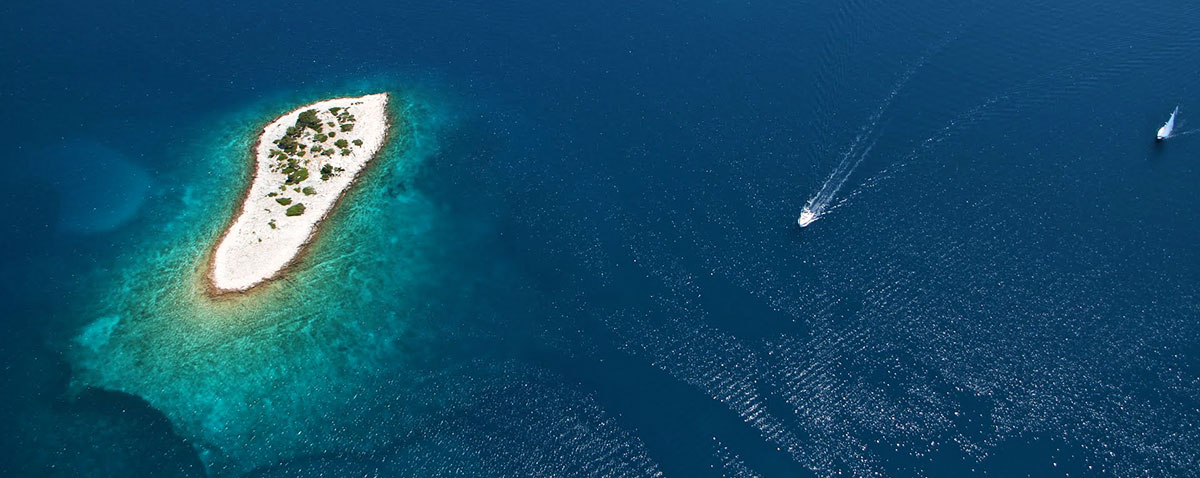
To sum up, this group of islands represents the densest archipelago in Mediterranean. It is located between Šibenik and Zadar, covers the area of about 320 km2 and makes 12% of all the islands in the Croatian Adriatic.
The biggest island is Kornat and the whole archipelago was named after it. Furthermore, this archipelago is 70 nm long, and 18,8 nm wide and there are four island chains divided in two groups. Upper Kornati (Sit and Žut island chains) with 51 land unit, and the other one is Lower Kornati with 98 land units. National park covers the biggest part of Kornati archipelago.
In 1980 large part of these islands became a national park in order to protect its natural beauty, rich underwater flora and fauna and its cultural values.
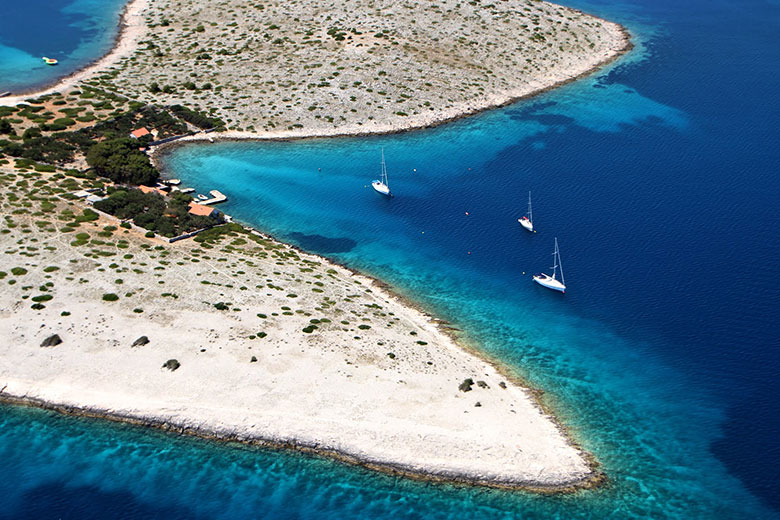
The best time of the year to visit Kornati is late spring and early autumn. Firstly, the temperatures are lower than in high season (August and July), but the sea is warm, especially in autumn so you can enjoy swimming and snorkeling as well as hiking. Besides lower temperatures, you can visit popular spots in National Park area without too many people wandering around and too many boats around you.
In summer, especially during high season, we try to avoid overcrowded places or to visit them in less busy hours so that our clients can have a more relaxing experience.
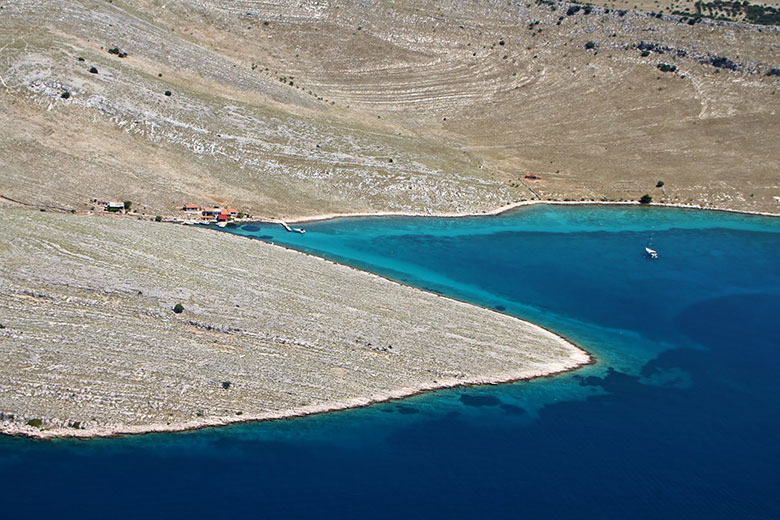
Most of the outer islands have high cliffs facing the open sea. These rock faces are the result of the fracturing and faulting of the Earth’s crust. Also the erosion process has adorned these massive surfaces. In some places in the Kornati archipelago underwater cliffs drop down vertically for almost hundred meters (on islands of Piškera and Rašip). The highest cliff is the one on the island of Klobučar (82 m), and the longest (above sea level) on the island of Mana (1350 m).
Take a look at our article Carved by the elements and find out more about these fascinating rock faces.

Kornati are accessible only by watercraft. Distance from the mainland is roughly 7 nautical miles from island of Murter, and 15 nautical miles from Šibenik and Zadar. Furthermore, Kornati National Park has two official entrances: from the north at the Velika Proversa strait, and from the south at Vrata od Opata.
There are two marinas in the Kornati archipelago – one in Kornati National Park (ACI Marina Piškera), and the other on the island of Žut (ACI Marina Žut).
There are no fuelling stations in the Kornati Park area!
The nearest outpatient clinics for medical assistance are located in Sali (on the island of Dugi otok), Murter and in Tisno, and the nearest hospitals are in Biograd, Šibenik and Zadar. The nearest medical institution providing assistance to divers is located in Split.
There is also no running water or electrical energy supply in National Park. Solar panels and generators secure the electrical energy, cisterns gather water (rainfall). For those with greater needs – water carriers transport larger amount of water.
The area of Kornati National Park and the other parts of the archipelago have poor mobile network signal coverage.
In the Kornati archipelago area there are sanitary facilities only within restaurants.
The entire land area of Kornati National Park is in private ownership, except for the coastal zone that represents the maritime domain. Hence, visitors can to walk only along the paths and trails specially marked for this purpose.
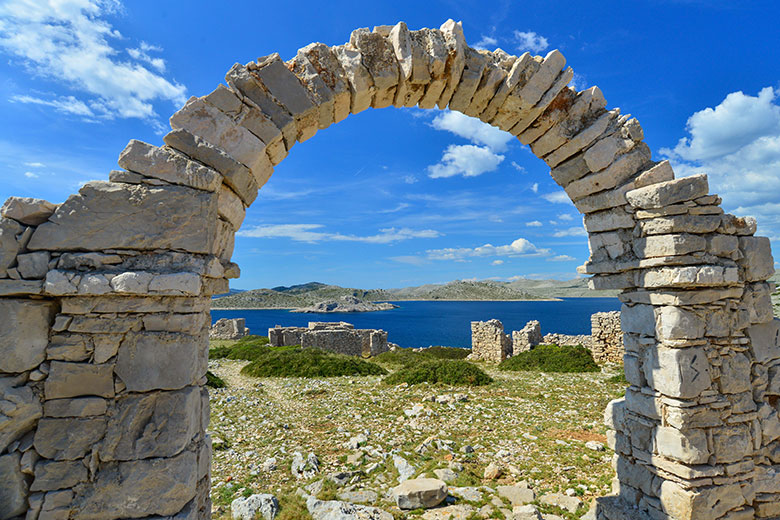
Finally, few words about one of the major attractions in Kornati. On top of the island of Mana lie the remains of a settlement constructed as a set for the film As The Sea Rages (1959). This is a group of a dozen stone built buildings and they represent houses, storehouses and a church. The remains of the church are particularly impressive. From the ruins of this scenery there is an an excellent view of the outer chain of islands. This old set has become a part of the cultural heritage.
You can find more useful informations about Kornati and this film in one of our blog post “Island Mana: Jump into the film… And into the sea“.
If you would like to know more about Kornati’s long and interesting history, we have written a few: Toreta and Tarac, Gajeta, the sacred boat, Another stone in the wall…
Join us on one of our tours and you will see many interesting spots such as a military sea tunnel, the parachute island, the fingerprint island… In the meantime, you can read about them on our Blog&Tips.
For all relevant informations about Kornati National Park please take a look at their official web site.